Cheek Filler in Reigate, Surrey
Every treatment carried out by Dr Haroon Ashraf, a GMC-registered doctor who injects full time.
Book a ConsultationWho cheek filler suits, and who it doesn't
Cheek filler is the treatment we recommend most often to people who came in asking about something else. Loss of support in the mid-face sits behind a good deal of what people describe as looking tired: the hollow under the eye deepens, the fold between nose and mouth gets heavier, and the lower face begins to drift. Rebuilding that support at the cheek is often the most efficient way to improve all three.
It is also the area where an overfilled face is made. So the assessment here is about where volume has actually been lost, not where more of it might look striking on the day.
Cheek filler tends to suit you if- The mid-face has flattened or hollowed with age, and your face reads as tired even when you are not
- You want definition along the cheekbone that your bone structure does not give you on its own
- The folds between nose and mouth are deepening, and you would rather address the cause than fill the fold directly
- One cheek sits lower or flatter than the other
- You are pregnant or breastfeeding
- You have an active infection in the area, or are unwell on the day
- The concern is loose skin rather than lost volume — filler cannot lift skin that has lost its elasticity, and adding volume to it can make heaviness worse
- Your mid-face is already full. Some faces need less, not more, and we will say so
- You are under 18 — we do not treat under-18s under any circumstances
Some people are better served by not having treatment at all, and we would rather tell you that than take the booking.
How Dr Haroon Ashraf approaches cheek filler
Assessment
Cheek filler goes wrong in one predictable way: volume placed where it looks striking on the day and heavy within a year. So we start with where support has been lost rather than where it might look good. We look at the face front-on and in profile, at rest and smiling, at how the cheek relates to the under-eye above it and the fold below it, and at how much of what you are seeing is volume loss and how much is skin.
Only then does a plan get made, and quite often it is a smaller plan than the one you came in with. If the concern is really the under-eye or the fold, we will say so and explain why we would start here anyway.
Product and Placement
We use hyaluronic acid filler only, and in the cheek we choose a product with enough structure to hold its shape against gravity and the constant movement of the face. Hyaluronic acid is reversible, and that is the reason we use nothing else.
Placement in the cheek is about the skeleton, not the skin. Filler is placed deep, on the bone, in small deposits, to rebuild the support that has been lost. That is what allows a modest volume to make a visible difference to the whole mid-face, and it is why the result looks like you rather than like an addition to you.
Comfort
Topical anaesthetic is applied first, and the filler itself contains lidocaine. The cheek is a well-tolerated area, and most people describe pressure rather than pain. The technique — where and how the filler is placed — is chosen for the area to give the best result while keeping trauma, and any discomfort, to a minimum.
Bruising is possible, as it is with any injection, and we take care to minimise it. If you take blood-thinning medication, tell us, and we will plan around it.
What the appointment looks like
Before You Arrive
You will be sent a medical questionnaire and consent form to complete beforehand, so the time in clinic is spent on you rather than on paperwork.
Ideally, avoid alcohol for 24 hours before your appointment. If you take any blood-thinning medication, let Dr Ashraf know — continue taking it as prescribed; it simply means bruising is a little more likely and we plan around it.
On the Day
Plan for around 45 minutes to an hour. Consultation and assessment come first, then topical anaesthetic, then the treatment itself, which takes around five to ten minutes. You will see the change in the mirror before you leave.
We photograph before and after at every appointment. Those photographs are yours, they form part of your clinical record, and they are only ever used elsewhere with your separate written permission.
Afterwards
Expect some swelling and tenderness for a few days, and the cheeks may feel a little firm for a week or two while the product integrates. Some people bruise; some do not. The final result is what you see at around two weeks, not on the day.
You will have written aftercare before you leave, and Dr Ashraf's direct contact details if anything concerns you. We review at two weeks, included rather than charged for.
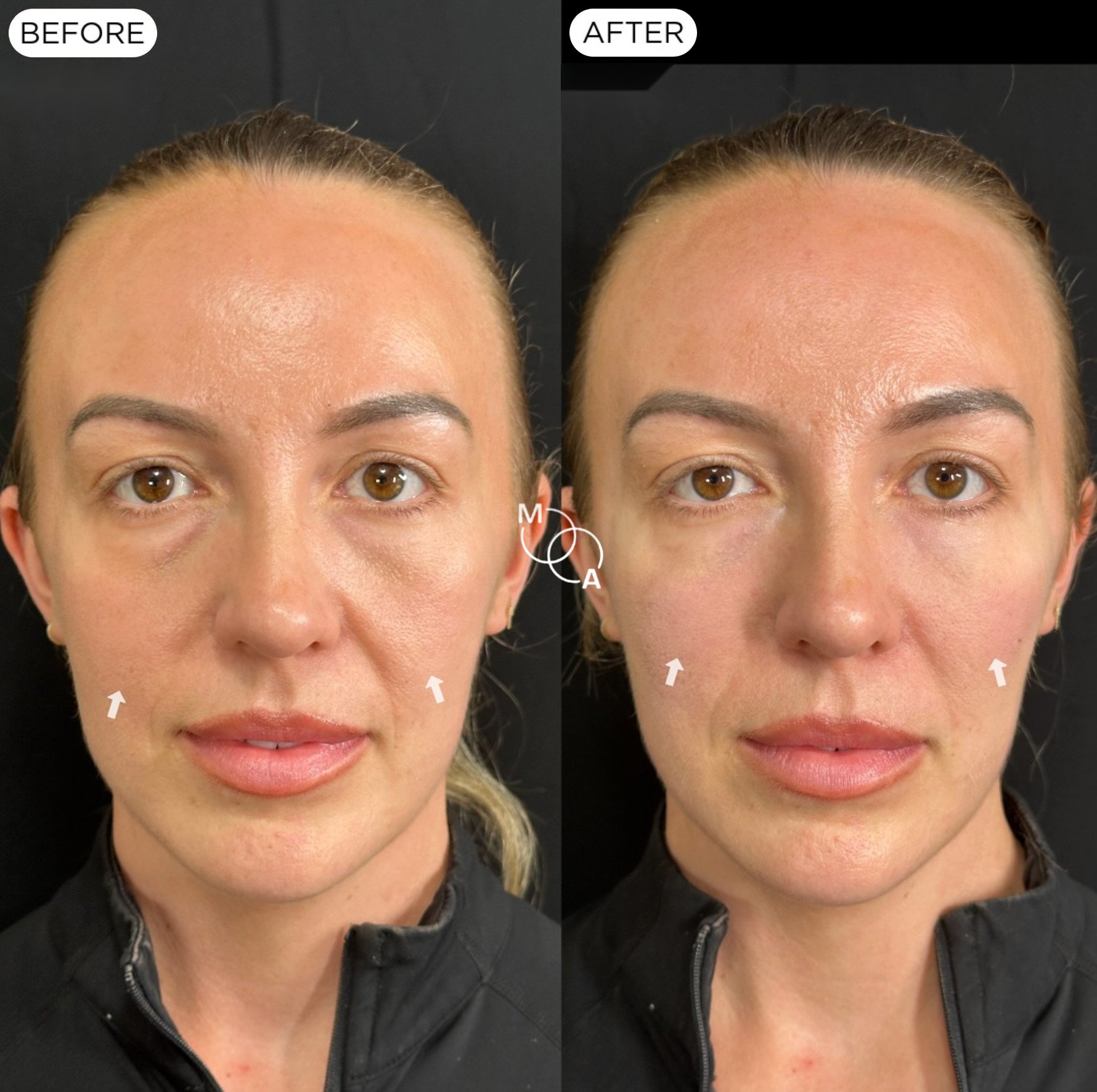
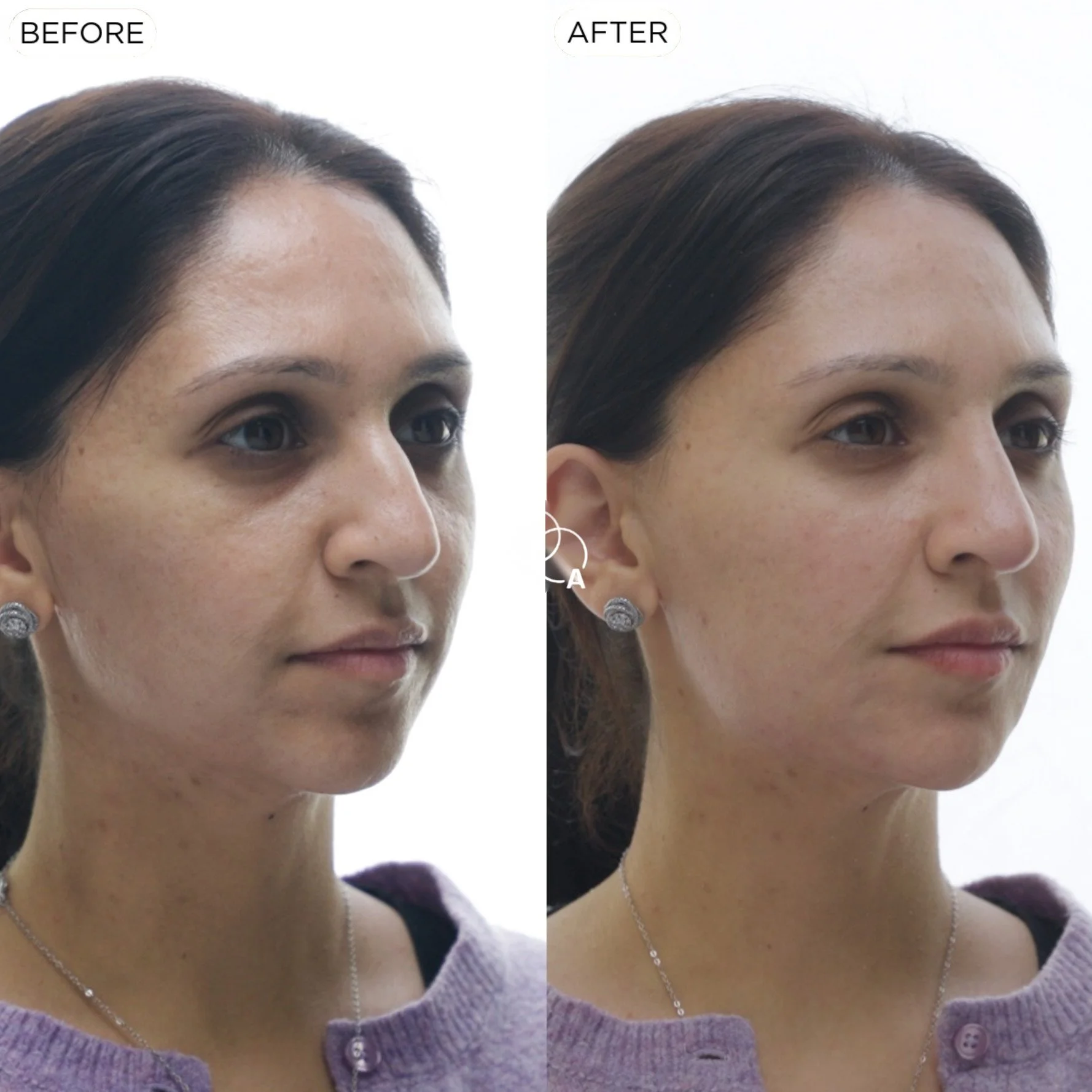
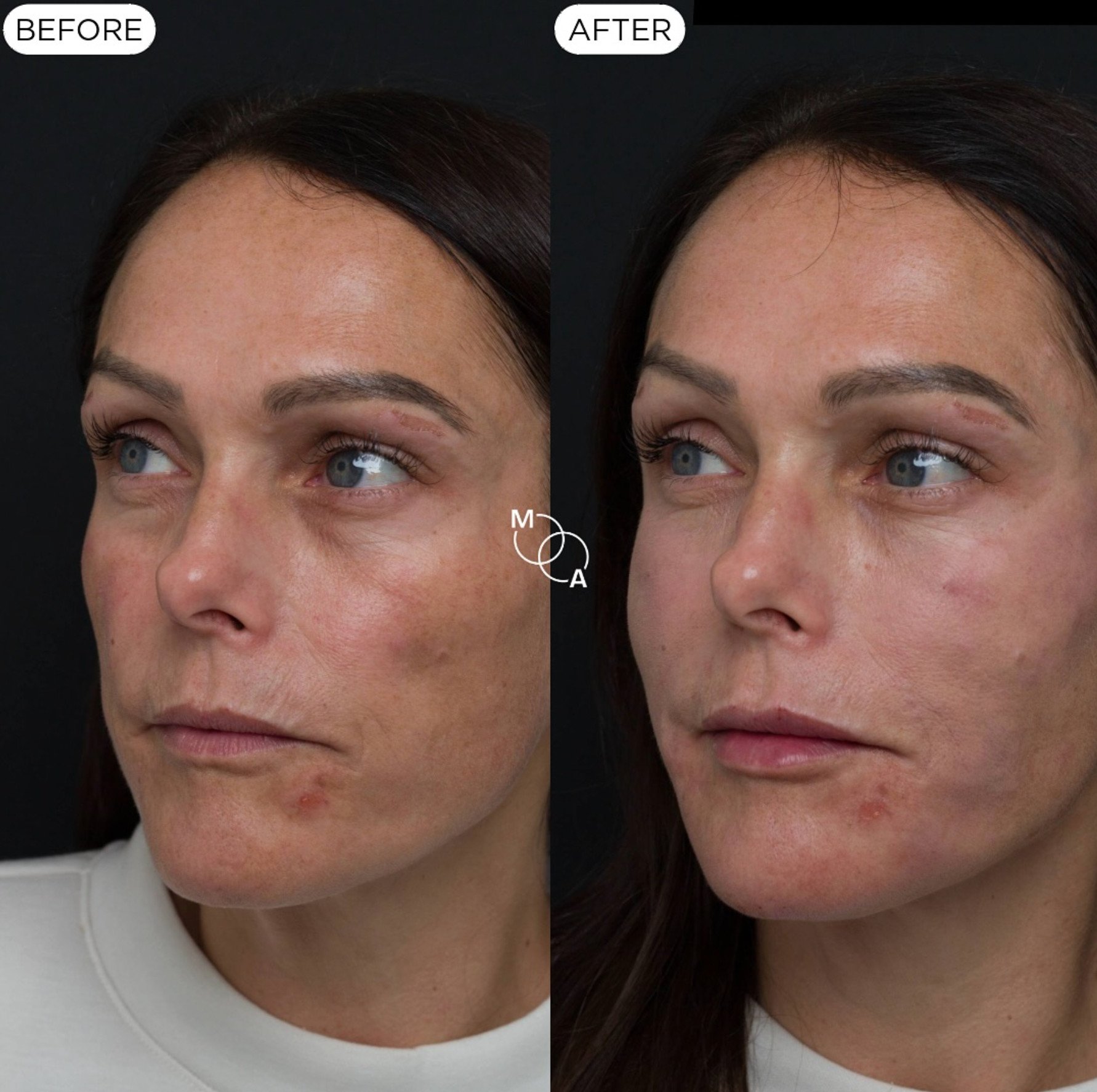
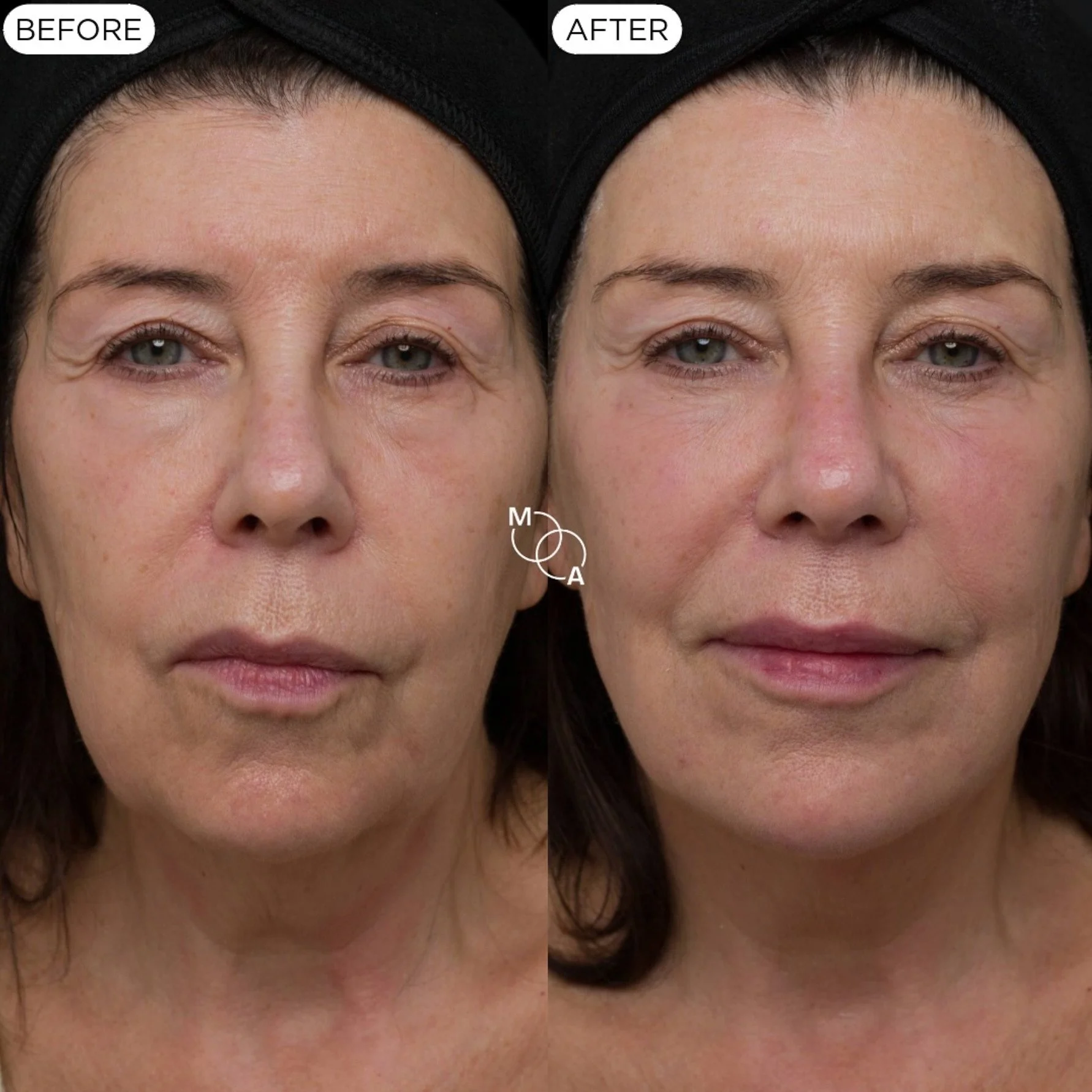
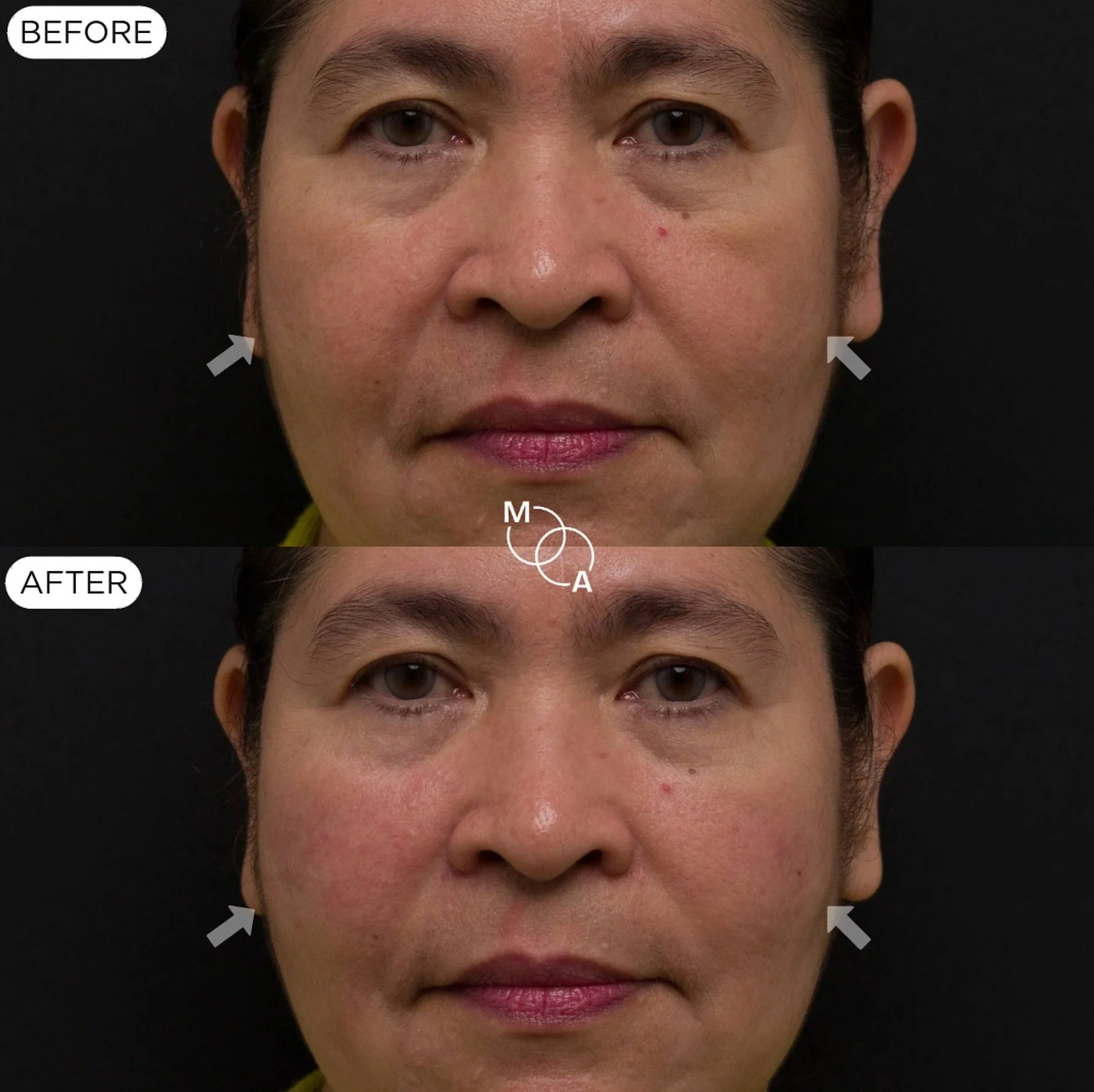
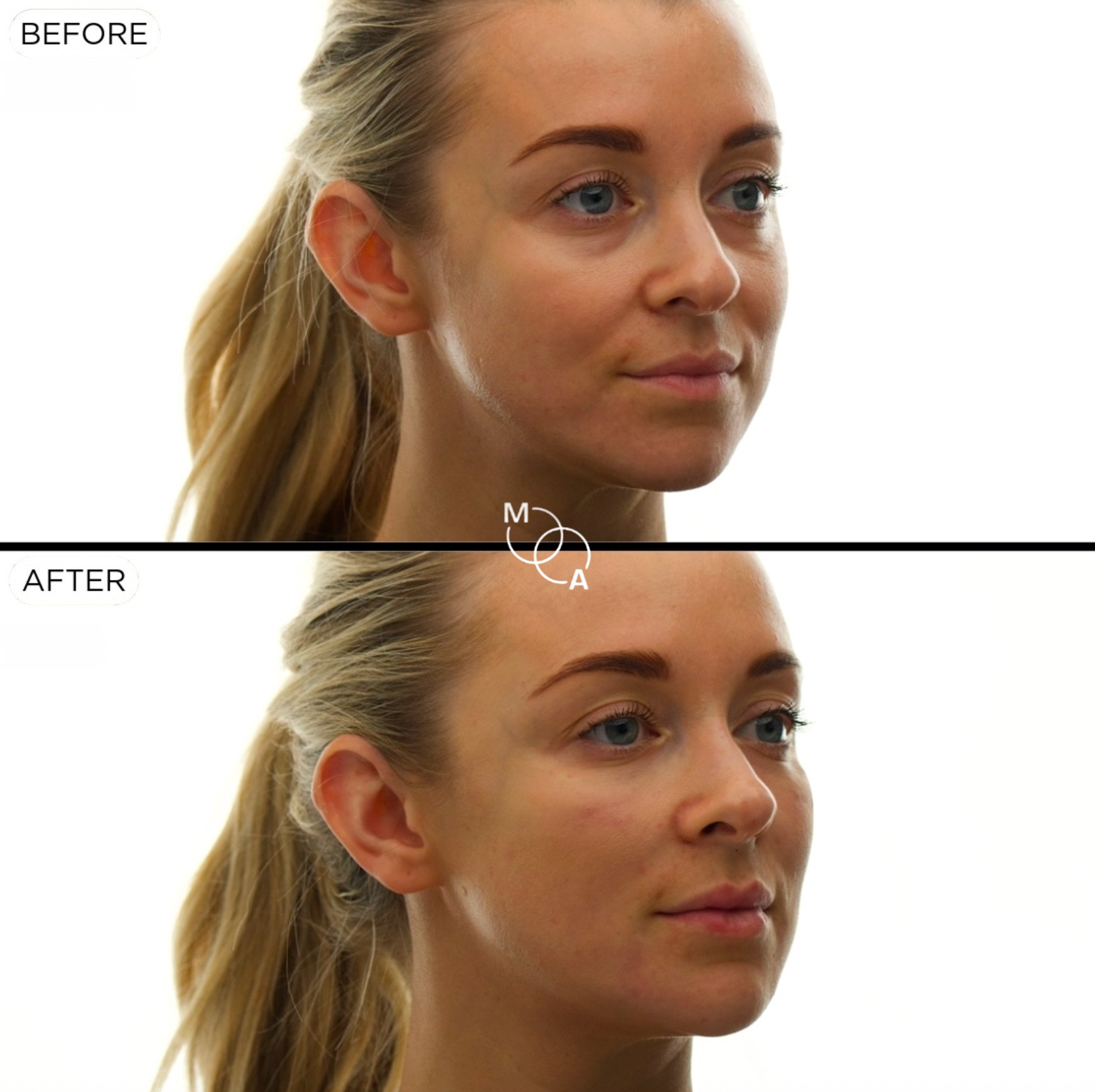
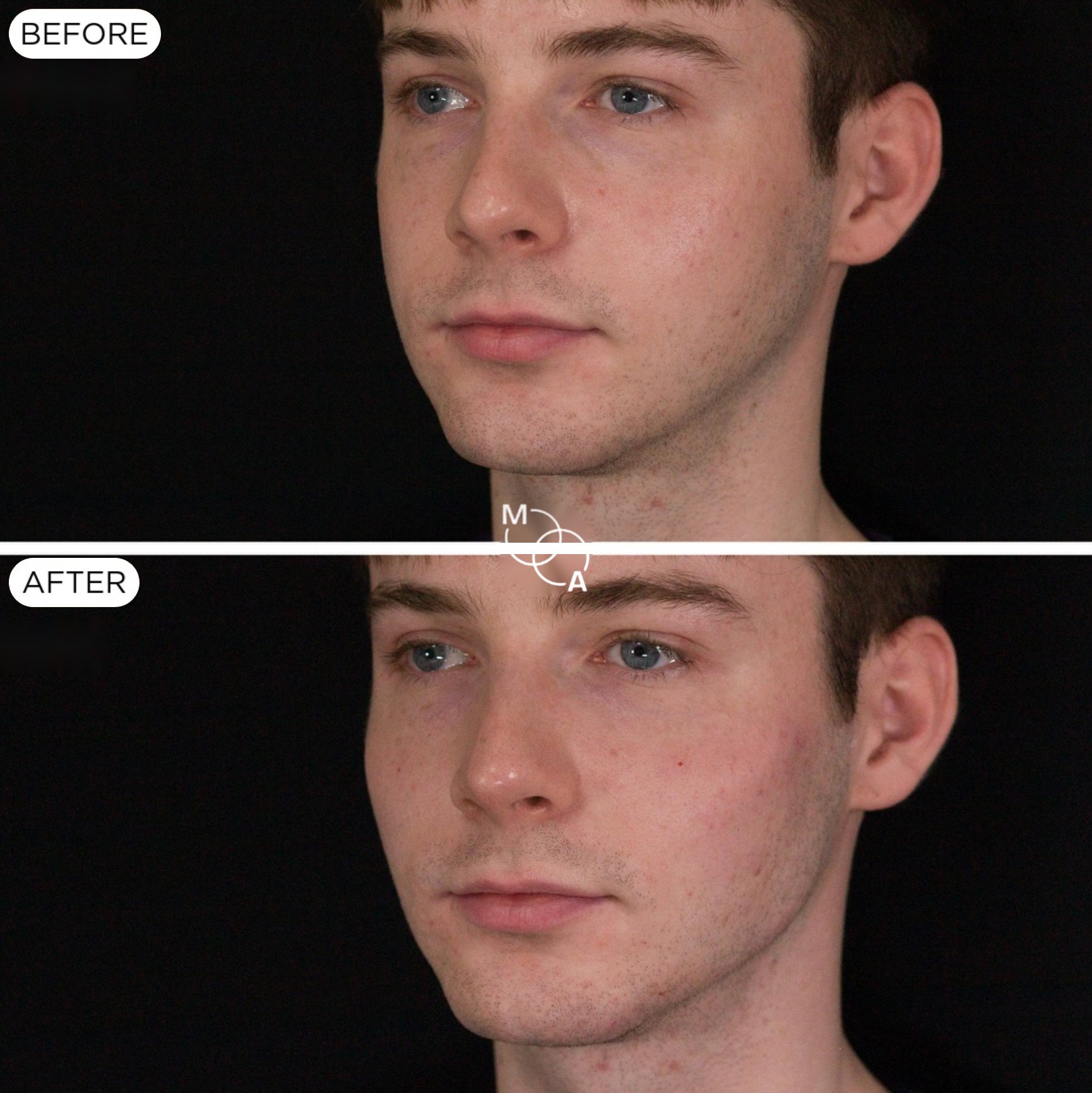
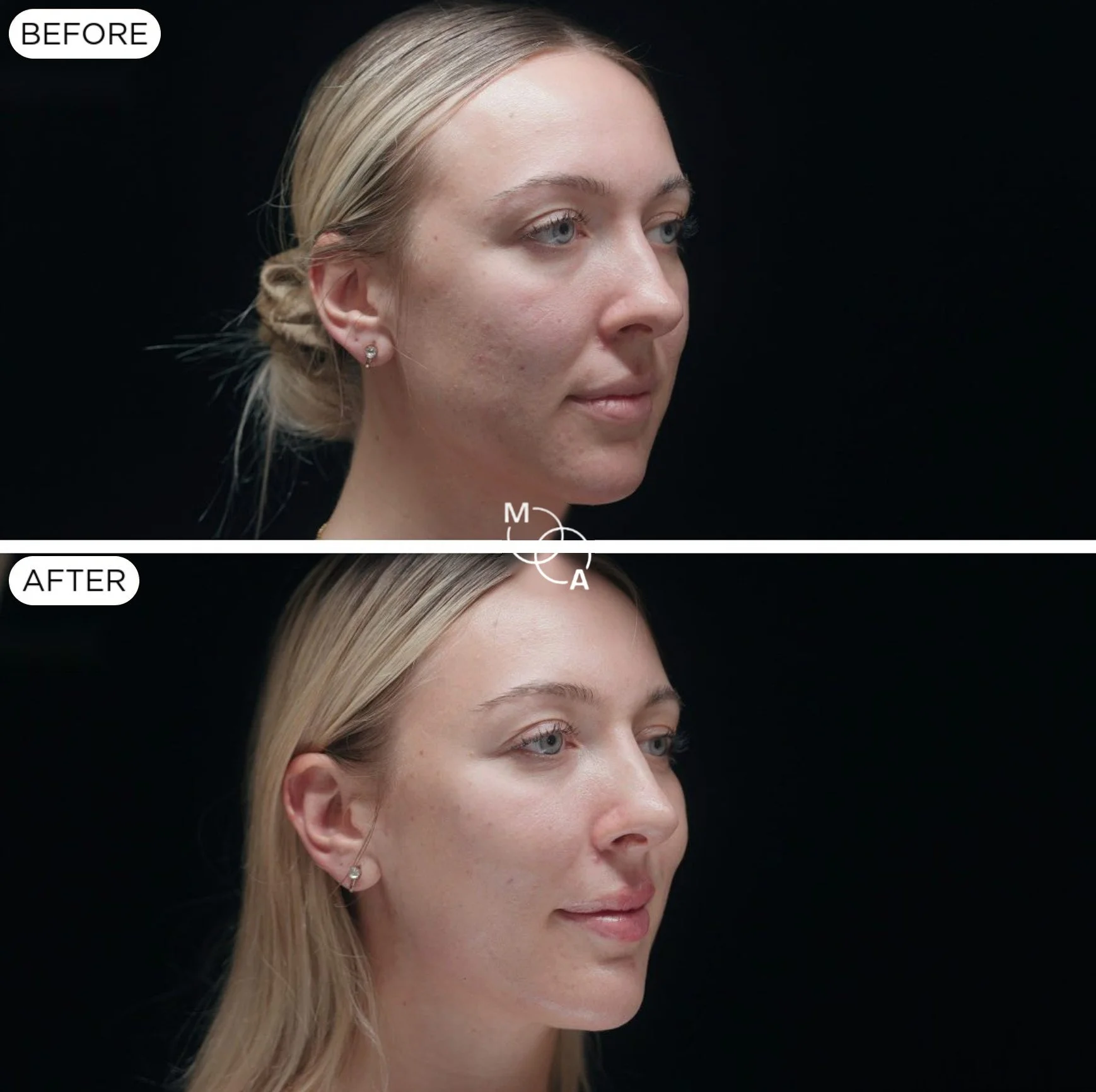
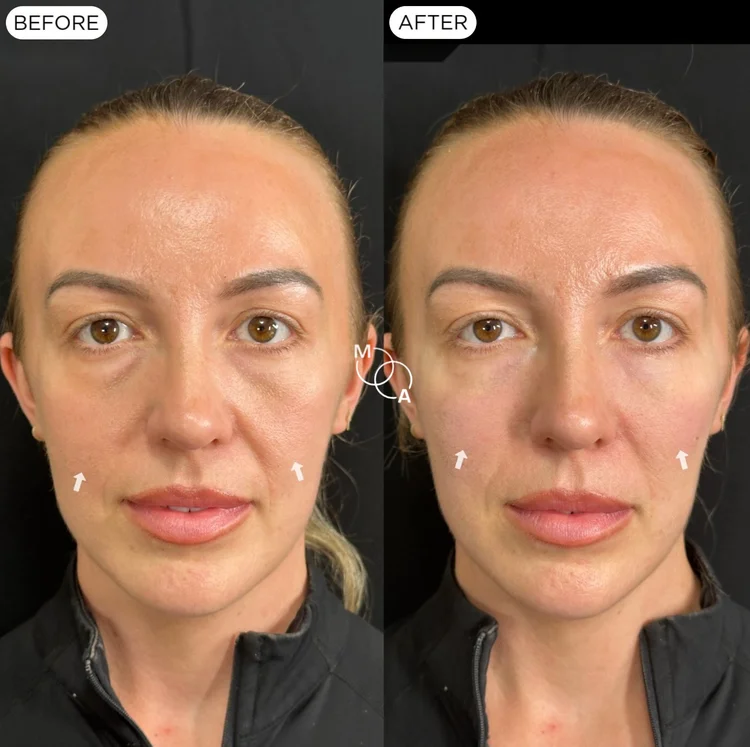
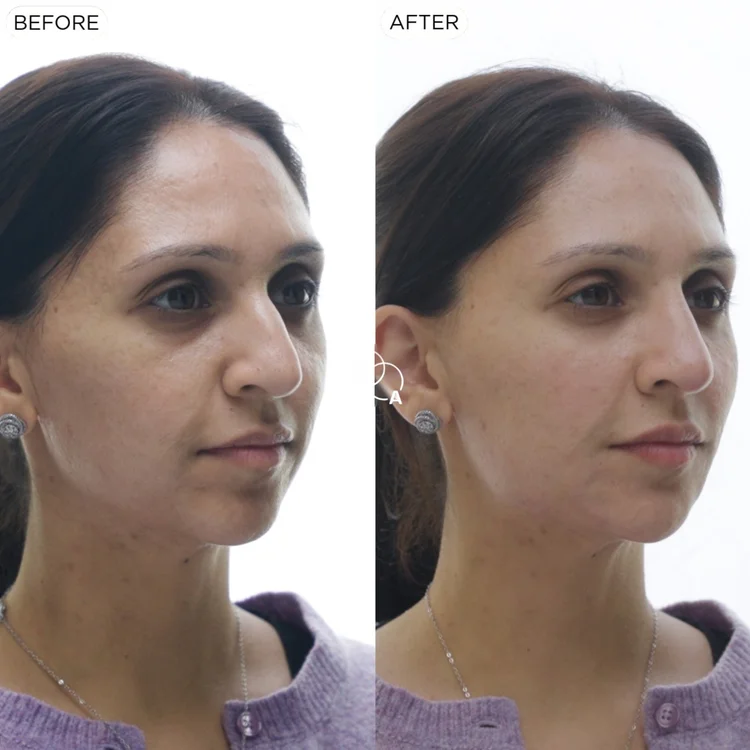
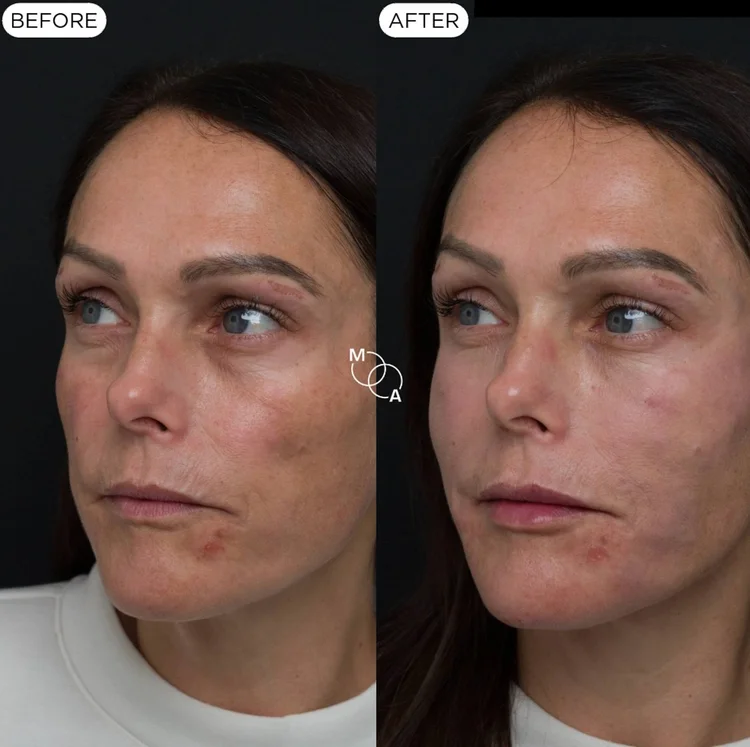
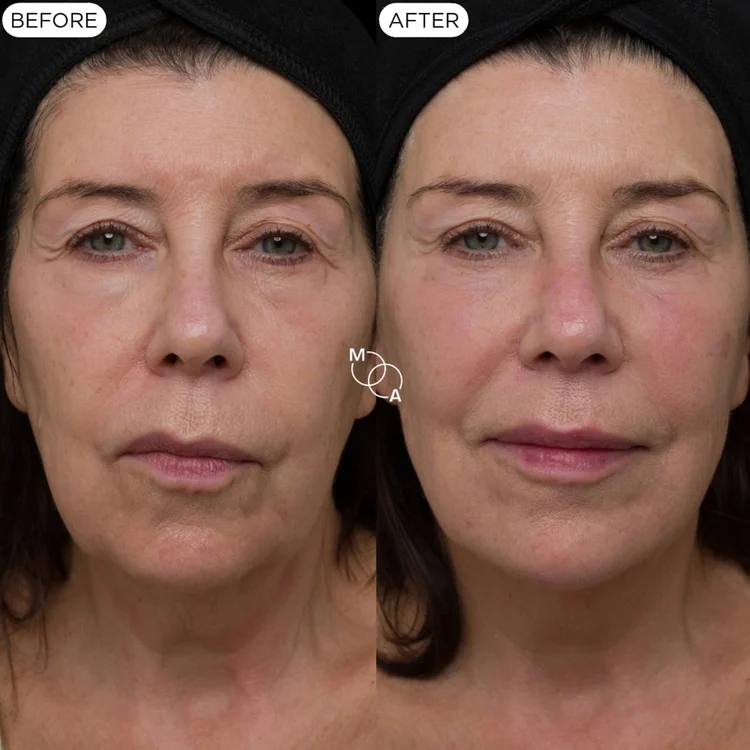
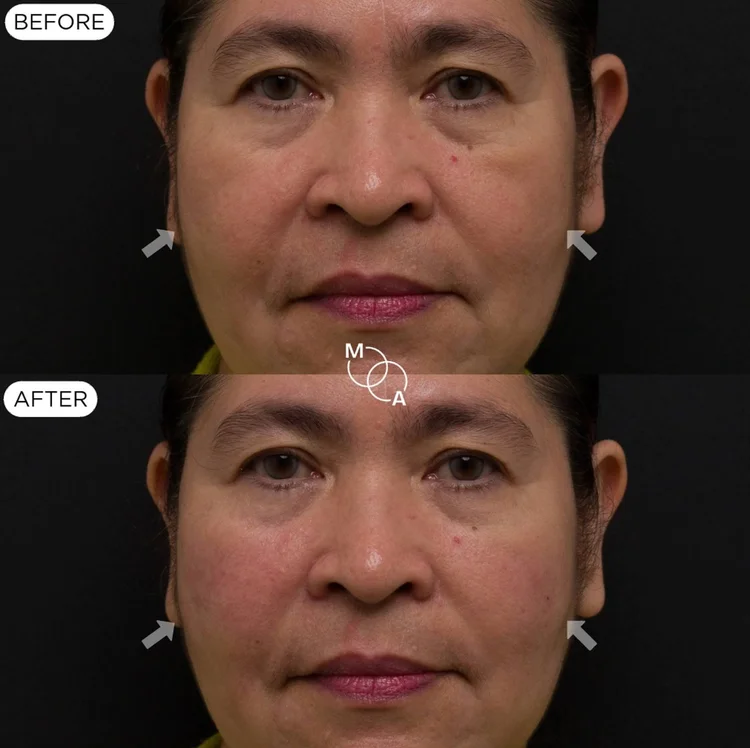
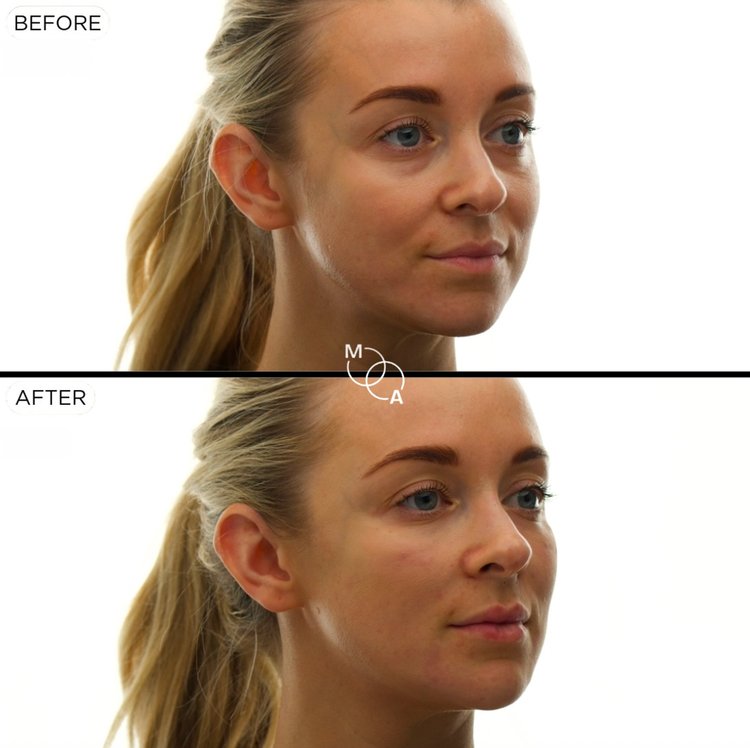
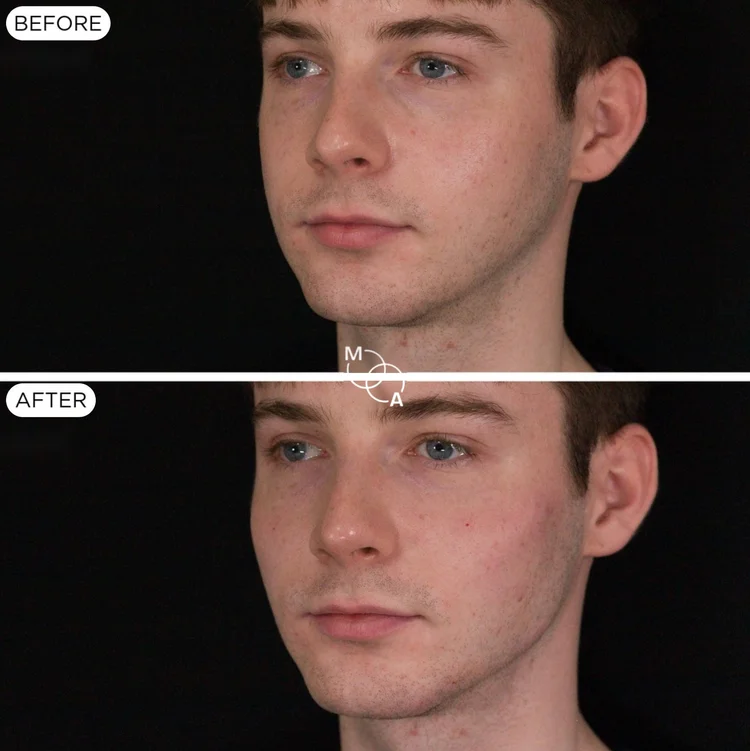
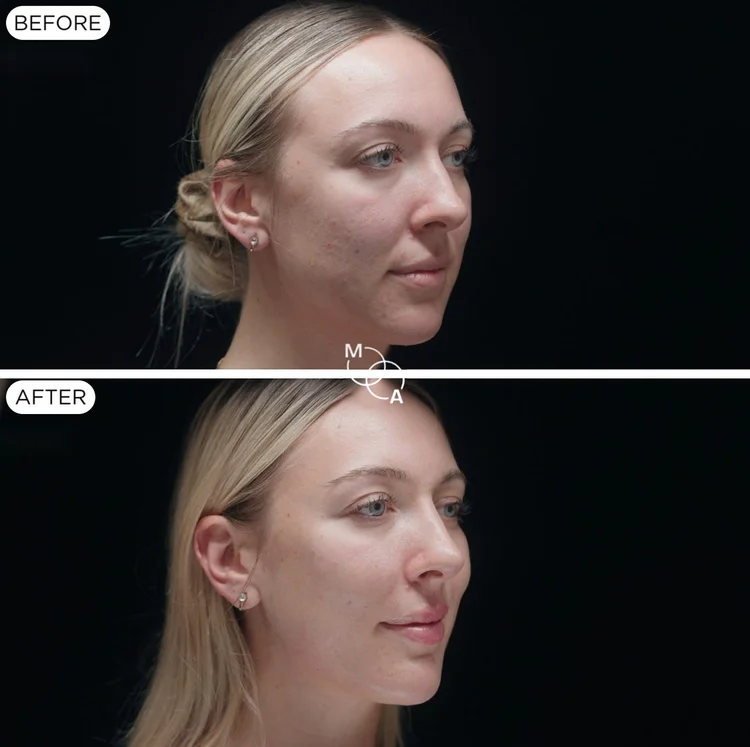
Cheek filler before and after
Every photograph below is of a patient treated by Dr Ashraf, shown with their written permission. Unretouched and unfiltered; where a patient has asked for it, their eyes are covered for privacy. Results are individual and yours will differ.
Cheek filler cost in Reigate
Prices are per one-millilitre syringe. Consultation, the treatment itself and your two-week review are all included; there is no separate consultation fee and no charge for the review.
Most cheeks need one to two millilitres for a visible, balanced result. We will tell you what we think you need, and what it will cost, at the assessment rather than partway through the treatment. Full pricing for every treatment is on our pricing page.

Risks, and how we reduce them
Cheek filler is a medical procedure and it carries medical risk. Any clinic that tells you otherwise is not one to be treated at.
Swelling, tenderness and bruising for a few days. A feeling of firmness or fullness while the product settles. Small lumps that resolve on their own, or that can be massaged out at your review.
Asymmetry needing correction, a lump that persists, prolonged swelling. Filler placed too superficially, or in too great a volume, giving a heavy or overfilled look. All are correctable, most of them by dissolving.
Vascular occlusion — filler entering or compressing a blood vessel. It is the complication that matters with any filler, and the reason a thorough knowledge of the anatomy is not optional. Done appropriately, with good technique and a proper understanding of where the vessels run, cheek filler is a safe and predictable treatment. Delayed-onset nodules and infection are also rare but possible.
Which is exactly why who treats you matters. Dr Ashraf is a GMC-registered doctor, trained to recognise a vascular occlusion and to reverse it with hyaluronidase, the agent used to dissolve filler. He also teaches: over 1,000 doctors, dentists and nurses have been trained by him in aesthetic injectable technique and in complication management.
Every treatment here is carried out by Dr Ashraf and not delegated, we use reversible hyaluronic acid filler only, you have direct contact details rather than a reception voicemail for the period after treatment, and we decline treatments we do not think are in your interest. More about Dr Haroon Ashraf.
Cheek filler FAQs
How long does cheek filler last?
Typically twelve to eighteen months. Cheek filler is placed deep, in an area that moves less than the lips, so it tends to outlast lip filler. The product often persists longer than the visible effect, which is why we assess what is still there before adding more rather than topping up to a calendar.
Will cheek filler make my face look bigger?
Not when it is placed correctly. The overfilled look people worry about comes from volume placed too superficially, or too much of it, or in a face that did not need it in the first place. We place small amounts deep on the bone, we build up rather than in one go, and we are comfortable saying no.
Can cheek filler help with hollows under my eyes?
Often, yes. In many people the hollow under the eye is a cheek problem: as the mid-face loses support, the transition from lower lid to cheek becomes a step rather than a slope. Restoring the cheek softens that step without treating the under-eye directly. Where it is not enough, tear trough filler is the next step, and we would discuss which order makes sense for you.
Does it help the lines from my nose to my mouth?
Usually. The nasolabial fold deepens as the cheek above it descends, so supporting the cheek often does more for the fold than filling the fold itself, and it looks more natural. Sometimes both are needed, and we would treat the cheek first. More on nasolabial and marionette line filler.
Does cheek filler hurt?
Most people describe pressure rather than pain. Topical anaesthetic goes on first and the filler itself contains lidocaine. The treatment itself takes around five to ten minutes, and almost everyone says the anticipation was worse than the treatment.
How much cheek filler will I need?
One millilitre per side is a common starting point, and some people need less. We will tell you what we think you need before anything is placed, and the price with it. We would rather you came back for more at your review than left with more than you needed.
What if I don't like it?
Hyaluronic acid filler is reversible, so it can be dissolved. We would wait at least two weeks first, so the swelling has gone and the product has settled — what you see on day three is not what you will see on day fourteen. We would talk it through at your review before making that decision.
Where are you based?
3 Holmesdale Road, Reigate, Surrey RH2 0BA. We see patients for cheek filler from across Surrey, including Redhill, Leatherhead, Dorking, Banstead and Horley.
Book cheek filler in Reigate
Consultations are with Dr Haroon Ashraf. There is no fee, and no obligation to book treatment on the day.
Book a Consultation3 Holmesdale Road, Reigate, Surrey RH2 0BA
07885 519 416 · info@mindfulaesthetics.co