PRP Treatment in Reigate, Surrey
For thinning hair and for skin quality, using your own blood. Every treatment carried out by Dr Haroon Ashraf, a GMC-registered doctor who injects full time.
Book a ConsultationWhat PRP is, and what it can and can't do
PRP stands for platelet-rich plasma. A small tube of your blood is drawn and spun in a centrifuge, which separates the plasma and concentrates the platelets within it. Platelets are known mainly for helping blood to clot, but they also carry growth factors, the signalling proteins your body uses to coordinate repair. Returned to the skin or the scalp, they prompt it to repair itself.
There is no filler and no manufactured product: the active ingredient is your own blood, prepared at the appointment. It adds no volume, relaxes no muscle, and works slowly, because you are waiting on your own biology.
We will be straight with you about the evidence. It is strongest for early hair thinning and more modest for skin, and the studies behind both are smaller than those behind most medical treatments. Results vary, and some people do not respond. If we think PRP is unlikely to help you, we will say so at the consultation rather than after three sessions.
PRP is likely to help if- Your hair is thinning or your parting is widening, and the follicles are still there to work with. PRP supports what is there; it cannot bring back what has already gone
- Your skin looks tired, dull or uneven rather than hollow, particularly if it is reactive or you would rather no product was placed in it
- You are happy to commit to a course and to wait for the result
- Your hair loss has not been explained. Thyroid problems, low iron, medication and certain scarring conditions need identifying first
- The shedding is seasonal, or began a few months after an illness, a birth or a stressful period. That usually settles once the trigger has passed
- Your scalp itches, burns or scales, or you have patches of complete, smooth hair loss. Those need a diagnosis, not PRP
- The concern is hollowness, a job for dermal fillers, or lines made by expression, where anti-wrinkle treatment is the right tool
- You have a blood disorder, take anticoagulant medication or have an active skin infection in the area. These need discussing first, and we will go through your full medical history
- You are under 18. We do not treat anyone under 18
PRP for thinning hair, and PRP for skin
The preparation is the same in both. What it is asked to do, and how it is placed, is not.
PRP hair treatment
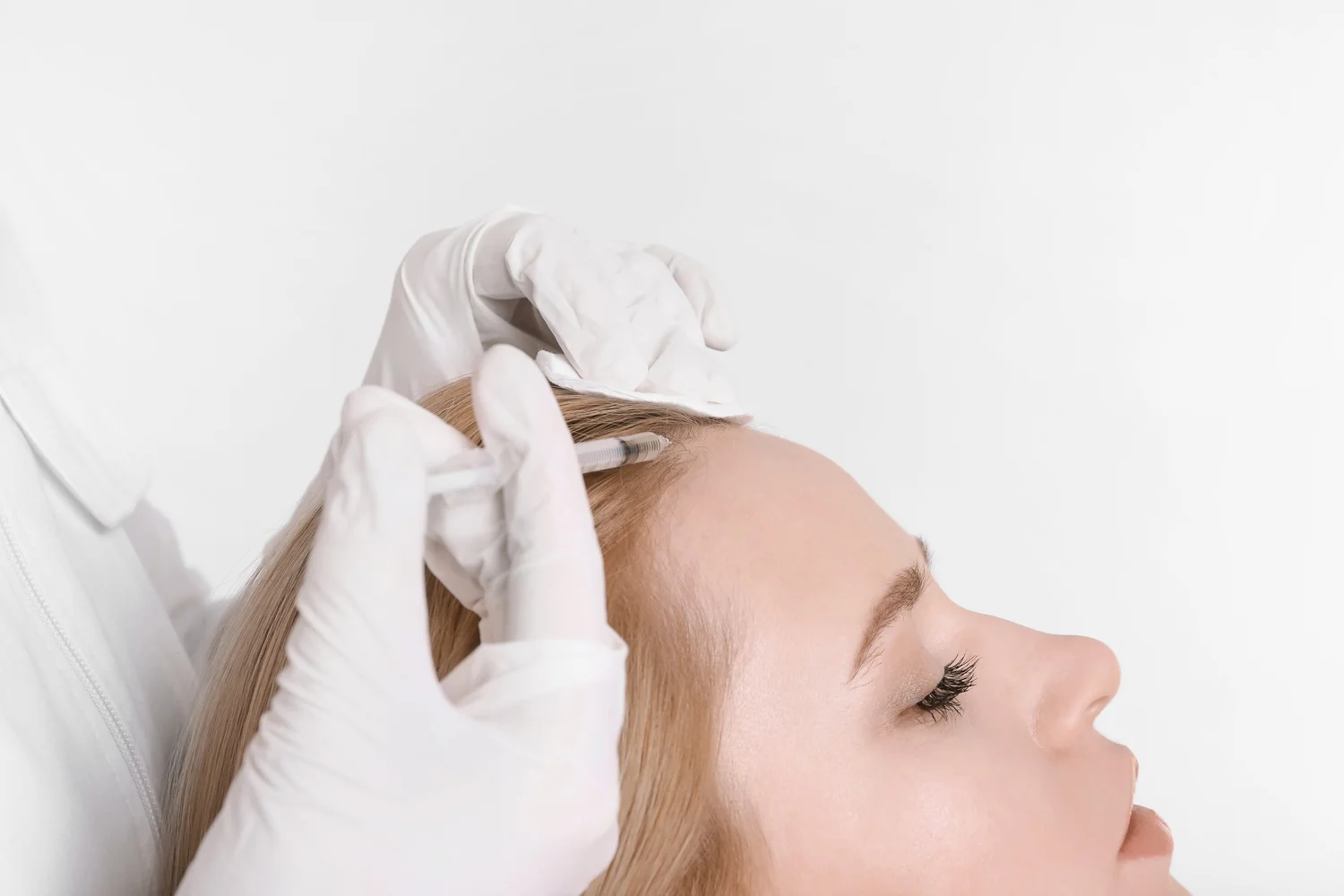
For thinning hair and early pattern hair loss. The concentrated platelets are injected into the thinning areas of the scalp to boost blood supply to the follicle and extend the growth phase of the hair. It works on follicles that are still alive but shrinking, so the people who benefit most are the ones who come early.
Not sure whether you are thinning or simply shedding? Read why hair sheds more in autumn, and when it isn't seasonal.
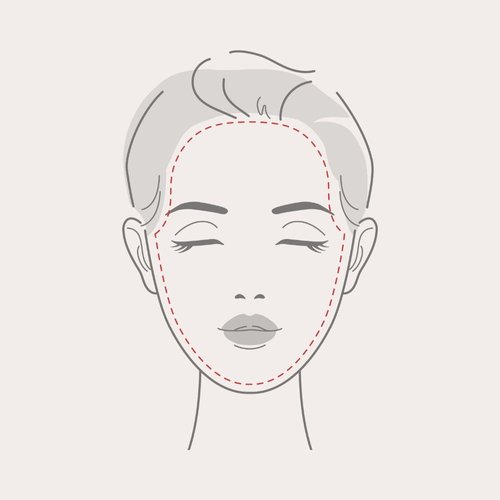
PRP facial and skin rejuvenation
For skin that looks tired, dull or uneven rather than hollow: texture, tone and fine lines. It is particularly useful around the eyes and on the neck and décolletage, where the skin is thin and volume would be the wrong answer. It does not lift, and it will not remove a line that is etched in at rest.
The plasma is either injected into the skin or worked in with microneedling, the treatment known as the vampire facial, which also helps rough texture, enlarged pores and mild scarring. Unlike skin boosters, PRP introduces nothing, and the two can be used together.
How Dr Haroon Ashraf approaches PRP
Assessment
Hair loss has many causes, and not all of them respond to PRP. The first job is working out which you have: a shed that will settle on its own, pattern thinning that will not, or something with a medical cause. Low iron, thyroid problems, vitamin D deficiency and anaemia are simple to test for; if they have not been checked, we will usually ask you to see your GP for blood tests first. Shedding that has lasted more than six months, an uneven pattern or any scalp symptom means a diagnosis first and treatment second.
For skin, we look at quality separately from structure. If what reads as tiredness is really shadow from lost volume, no skin treatment will fix it, and we will tell you so.
Preparation and Technique
The blood is prepared at the appointment, in a centrifuge that separates the plasma and concentrates the platelets. The platelet-rich layer is what goes back, and it is your own.
On the scalp, it is injected across the thinning areas, with the injection points adjusted from session to session as your hair responds. On the face, it is injected into the skin or worked in with microneedling. Photographs taken before the first session mean progress is judged against them rather than against memory.
Comfort
The blood draw is a single small tube, taken the way a routine blood test is; if you have ever felt faint at one, tell us beforehand. The injecting takes five to ten minutes, and the scalp is usually more tender than the face.
If you take blood-thinning medication, tell us before you book, and never stop anything prescribed on our account.
What a PRP appointment looks like
Before You Arrive
You will be sent a medical questionnaire and consent form to complete beforehand. Ideally, avoid alcohol for 24 hours before your appointment, and if you have had blood tests for hair loss, bring the results.
If you are driving, allow a little extra time for parking on Holmesdale Road.
On the Day
Plan for around forty-five minutes. A consultation and assessment with Dr Ashraf come first, and the plan, the number of sessions and the price are agreed with you before anything is booked.
Then the blood is drawn, spun in the centrifuge, and the platelet-rich plasma returned to your scalp or skin. You can go back to your normal activities straight afterwards.
Afterwards
Redness on the face usually settles within a day or two, or two to three days after microneedling. The scalp can be tender for a day or two, sometimes with a headache. You leave with written aftercare and Dr Ashraf's direct contact details.
The course usually runs to three sessions about a month apart, sometimes six for hair, then maintenance every six to twelve months. Three to six months is the fair timeline for judging it.
PRP, explained by Dr Haroon Ashraf
What PRP is, how it is prepared from your own blood, how it is used for thinning hair and for skin quality, and what to realistically expect from it.
PRP cost in Reigate
Three treatments, each using platelet-rich plasma prepared from your own blood at the appointment. Prices are per session, and lower per session for a course.
Hair Rejuvenation
Skin Rejuvenation
PRP with Microneedling
The plan, the number of sessions and the price are agreed with you before anything is booked, with no obligation to book a course on the day. Every treatment at the clinic is listed on our pricing page.
Risks, and how we reduce them
Drawing, handling and injecting blood makes PRP a medical procedure rather than a beauty one. There is no introduced product to react to, which removes some risks, but not all of them.
One more risk matters as much as any side effect: that PRP does not work for you. Results vary, and some people do not respond at all. That is why we assess before we treat, judge progress against photographs, and tell you if a course is not worth continuing.
Every treatment here is carried out by Dr Ashraf, a GMC-registered doctor who injects full time, and is not delegated. He is also a senior clinical trainer at Derma Medical, and has trained over 1,000 doctors, dentists and nurses in injectable technique and complication management. More about Dr Haroon Ashraf.
PRP FAQs
How many PRP sessions will I need?
Usually three, about a month apart, then maintenance every six to twelve months. For hair, some people are advised a longer first course of up to six sessions. The number is agreed with you at the consultation.
How soon will I see a difference?
Not on the day. On the face, the first change usually appears at around four to six weeks and builds for about three months. On the scalp, the first sign is often less shedding, before any change in thickness. For both, three to six months is the fair timeline for judging it. Results vary, and some people do not respond.
Does PRP hurt?
The blood draw feels like any routine blood test. The injecting takes five to ten minutes, and the scalp is usually more tender than the face, with some tenderness for a day or so afterwards. If you are anxious about needles, tell us beforehand.
Is PRP better than other hair-loss treatments?
It is one option rather than a replacement for the others, and the right choice depends on the cause. A shed after illness, childbirth or stress usually settles on its own; low iron or a thyroid problem needs treating at the source. For established pattern loss, medical treatment may be the better answer, and PRP is sometimes used alongside it. Where hair has already gone, PRP cannot bring it back. Choosing needs a medical assessment, not a price comparison, and if the answer lies with your GP, we will tell you.
Can PRP help under the eyes?
Yes, for the quality of the skin. It is particularly useful around the eyes, where the skin is thin and volume would be the wrong answer, and over a course it can improve fine lines and texture. It does not fill a hollow: if the tired look is mostly shadow, tear trough or cheek filler is more likely the answer, and for thin, crepey under-eye skin, polynucleotides are another option.
Is there any downtime?
Very little. Redness on the face usually settles within a day or two, or two to three days after microneedling, and the scalp can be tender for a day or two after hair treatment. You can usually return to your normal activities the same day.
Will I need maintenance?
Yes. PRP does not stop ageing, or the process behind pattern hair loss, so the improvement has to be maintained. Once the first course is complete, a session every six to twelve months is typical, with the interval set by how your hair or skin responds.
Where are you, and do you see patients from outside Reigate?
The clinic is at 3 Holmesdale Road in Reigate, Surrey, one minute from Reigate station and open seven days a week by appointment. Patients come to us for PRP from across Surrey: Redhill and Merstham are under ten minutes away, Dorking, Banstead, Leatherhead, Horley and Caterham are a comfortable drive, and junction 8 of the M25 is about ten minutes from the clinic.
Book PRP in Reigate
Every appointment starts with a consultation with Dr Haroon Ashraf, and there is no obligation to book treatment on the day.
Book a Consultation3 Holmesdale Road, Reigate, Surrey RH2 0BA
07885 519 416 · info@mindfulaesthetics.co