Can Botox Look Natural? What Actually Decides It
Yes — and when it does not, the treatment is almost never the reason. Dose and placement are.
The frozen forehead everyone is afraid of is a decision someone made, not a property of the drug. Here is what actually separates a result nobody notices from one everybody does.
Why some results look obvious
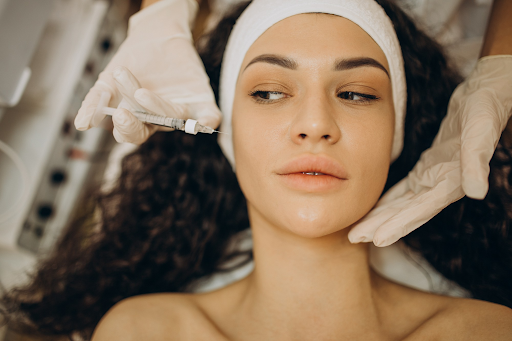
Botulinum toxin reduces the signal between nerve and muscle so the muscle contracts less forcefully. That is the whole mechanism. Whether the result reads as natural or not comes down to how much was used, where it went, and whether the person injecting understood the face in front of them.
Three things produce the obvious look.
Too much, too high. The forehead muscle is the only thing lifting your eyebrows. Treat it heavily and the brow drops, which is what people mean when they say someone looks heavy or tired after treatment.
Treating the frown without the forehead, or the other way round. These muscles work against each other. Relax one and leave the other untouched and the balance shifts, which is where the raised, surprised arch comes from.
Dosing from a chart rather than a face. Muscle strength varies enormously between people. A dose that leaves one person natural leaves another unable to move, and there is no way to know which you are without assessing you in movement first.
The short answer on dose
We treat conservatively at the first appointment and review at two weeks. If more is warranted, it goes in then. It is straightforward to add and impossible to remove, so the asymmetry of that decision should always point the same way.
Some people leave slightly under-treated on purpose. Almost nobody minds once it is explained, and it is the single biggest reason patients tell us the result looks like a good night of sleep rather than a procedure.
| Treatment Area | Purpose | Typical Results |
|---|---|---|
| Forehead lines | Soothing horizontal lines across the forehead | Relaxed and youthful appearance |
| Frown lines | Soften lines between eyebrows | Reducing concerned lines and addressing the "11" lines |
| Crow’s feet | Minimising lines around the eyes | Refreshing the eye area |
| Jawline contouring | Slimming jawline by relaxing the masseter muscle | More contoured jawline |
What natural actually means
It does not mean no movement. It means movement that belongs to you.
A natural result keeps expression and removes the etching. You can still frown, still raise your eyebrows, still look surprised or concerned — the lines simply do not carve in as deeply while you do it. People notice that you look well. They do not notice why.
The opposite, a completely still upper face, is not a stronger version of the same result. It is a different result, and it is one most patients did not ask for.
Where it is easy and where it is harder
The frown lines between the brows are the most forgiving area. There is a clear muscle group, and softening it rarely costs you anything you wanted to keep.
The forehead is the least forgiving, because the same muscle you are treating is the one holding your brows up. This is the area where restraint matters most and where over-treatment is most visible.
Crow’s feet sit in between. They respond well, but the skin around the eyes is thin, so where lines are already etched at rest, treatment softens rather than erases them and the rest of the answer is skin quality.
Lines already present when your face is completely still are not primarily a muscle problem. Those need skin quality work or volume, and expecting anti-wrinkle treatment to remove them is the most common reason people feel it did not work.
| Myth | Reality |
|---|---|
| Wrinkles get worse once you stop the Botox procedure | Wrinkles do not get worse but return to the pre-treatment phase once you stop the procedure |
| Botox is painful | Patients typically feel a quick, mild pinch upon insertion |
| Botox is only for older people | People in their 20s and 30s can use preventive Botox to lower the initial formation of fine lines |
| Botox offers instant results | 3 to 7 days for initial changes and 10 to 14 days for final results |
Why the two-week review matters
Onset is gradual. You will see something at three to five days and the true result at around two weeks, which is the only fair point to judge it.
We book that review as standard. It is where small asymmetries get corrected, where a little more goes in if it is needed, and where we record what worked so the next appointment starts from evidence rather than memory.
Clinics that treat and do not review are not being lazy so much as guessing, and you are the one who lives with the guess for three months.
How long it lasts
Typically three to four months, often longer with repeated treatment as the muscle gradually reduces in bulk. Stronger muscles and higher activity shorten it.
We do not run a rebooking schedule. Come back when you notice movement returning and we will assess from there — treating to a calendar is how people end up over-treated over years rather than in any single appointment.
| Question | Why is it needed? |
|---|---|
| Can I see before-and-after photos from your own patients? | Reflects the actual technique, thereby increasing your trust in the clinic. |
| How do you approach first-time patients? | Shows whether the clinic ensures conservative doses, or adopts any specific measure to tackle first-timers. |
| What happens if I am unhappy with the result? | Lets you understand the review policy of the clinic clearly. |
| How many units will I need and how much will it cost? | Clarifies the total units and how much you have to pay. |
What to ask before you book
Who is injecting me, and what is their medical qualification? In England there is currently no specific legal requirement for an injector to hold one. A GMC, GDC or NMC number can be checked online in a minute.
Who prescribed the medicine, and did they assess me in person? Botulinum toxin is a prescription-only medicine. Someone without prescribing rights can administer it but cannot prescribe it, and remote prescribing for cosmetic injectables falls below the standard expected of prescribers.
Do you review at two weeks, and is it included? If the answer is no, ask what happens if it is uneven.
Have you ever declined to treat someone? If the answer is no, ask a follow-up.
How we approach it
Every treatment here is carried out by Dr Haroon Ashraf, a GMC-registered doctor who works in aesthetics full time and teaches injecting technique to other practitioners. Not supervised by. Carried out by.
We assess your face in movement rather than at rest, because the pattern of your own muscle activity is what decides where the product goes. We use several licensed botulinum toxin products and select between them for the area and the result rather than for convenience.
And because Dr Haroon is a prescriber, treatment can usually be carried out on the same day as your consultation if you are happy to go ahead, rather than requiring a second appointment with a separate prescriber.
You can read more about the treatment itself on our anti-wrinkle treatment page, or see patient results.
Anti-wrinkle treatment in Reigate and across Surrey
The clinic is on Holmesdale Road in Reigate, open seven days a week from 9am to 8pm. Patients travel to us from across Surrey: Redhill and Merstham are under ten minutes away, with Dorking, Banstead, Leatherhead, Horley and Caterham all within a comfortable drive, and junction 8 of the M25 about ten minutes from the door.