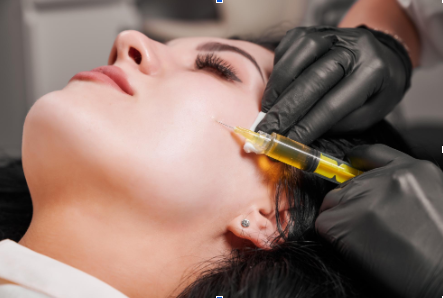
PRP Facial Treatment: How PRP Therapy Supports Anti-Aging and Skin Healing

Reversing the signs of aging is a common preference for many people. The Platelet-Rich Plasma (PRP) therapy ensures anti-aging by utilizing your body’s natural healing power, along with healing your skin. 

PRP Facial Treatment

 PRP Facial Treatment

Key Takeaways

  • Scientific Mechanism: The treatment involves a simple 45-to-90-minute process of drawing blood, spinning it in a centrifuge to separate platelets, and reapplying the growth-factor-rich plasma to stimulate cellular repair.

  • Anti-Aging Benefits: PRP actively stimulates fibroblasts to synthesize new collagen and elastin, which fills in sunken areas like cheeks and tear troughs, smooths fine lines, and corrects uneven texture.

  • Advanced Skin Healing: It accelerates tissue repair, corrects acne scars, and calms prolonged inflammation through complex biological processes like immunomodulation and angiogenesis (building new blood vessels).

  • Pre- and Post-Care Rigor: Patients must stop blood-thinning medications 10–14 days before treatment and strictly avoid harsh skincare actives (like Retinol or Vitamin C), makeup, and face washing for 24 hours to 7 days afterward.

PRP therapy refers to a type of regenerative medicine that boosts the growth factors in your blood to heal damaged tissues. This treatment has revolutionized skincare as it is a minimally invasive procedure that quickens tissue healing. As there is a growing demand for holistic and non-surgical anti-aging solutions, this treatment is getting a global priority. 

In this blog, we will talk about how PRP facial treatment supports anti-aging and skin healing.

How Does PRP Treatment Work?

Platelets and growth factors contribute to body healing via clot formation to stop bleeding and releasing signaling proteins like VEGF, PDGF, and TGF-beta. These proteins manage inflammation and boost collagen production. Let’s understand the working procedure of PRP therapy

Blood Collection: A small amount of blood is drawn from a vein in your arms. With a sample of 15 to 50 ml, this is similar to a standard blood test. 

Centrifugation: The obtained blood sample is placed in a centrifuge machine where red blood cells and white blood cells are separated from platelet-rich plasma.  

Application: The isolated PRP is applied to your face. This is usually paired with direct micro-injections or microneedling (creating micro-channels for deep absorption). 

How Does PRP Treatment Facilitate Anti-Aging?

PRP treatment Helps anti-aging via:

Collagen Synthesis 

Collagen is a protein that is responsible for elasticity and skin firmness. As we age, the collagen level decreases. The growth factors present in PRP form new collagen by stimulating fibroblasts. 

The newly produced collagen softens fine lines while thickening the dermis and plumping your skin. This contributes to a younger-looking skin.  

Restoring Lost Volume 

Referring to the PRP procedure, concentrated platelets from a patient's own blood are injected in facial areas like the cheeks or tear troughs. This leads to forming new elastin and collagen while rebuilding long-lasting fullness. 

The used growth factors help your body to generate new tissues within several months. Hence, you can obtain subtle volume within a short span. We inject growth factors on the lost volume areas for a perfect restoration. Hence, this anti-aging treatment makes you look younger. 

Improving Radiance and Texture

As the PRP treatment stimulates collagen production, cell turnover is accelerated and damaged tissues are repaired. This procedure contributes to minimising acne scars, evening out pigmentation, and smoothening rough spots. Therefore, your skin looks more glowing.

This treatment stimulates blood flow to specific areas while bringing vital nutrients to the skin. This makes your face look more radiant while exhibiting an improved texture. 

How PRP Treatment Acknowledges Skin Healing?

PRP therapy accelerates skin healing by: 

Targeting Acne Scars

By stimulating new collagen production, PRP treatment plumps and rebuilds depressed and boxcar scars. Hence, the overall healing process is elevated. 

The reintroduction of platelets results in releasing growth factors that signal the body to repair the damaged tissue. As the growth factors trigger fibroblasts in your facial skin, healthy collagen is synthesised to fill in the depressed scars. 

Immunomodulation

PRP treatment transforms a prolonged inflammatory response into a regenerative environment while acknowledging immunomodulation. Here, immune cells are shifted towards tissue repair while suppressing pro-inflammatory cytokines. This aids in creating a balanced healing cascade. 

Angiogenesis 

PRP healing for skin contributes to promoting angiogenesis as it releases high concentrations of growth factors from activated platelets. These proteins result in migrating endothelial cells as new blood vessels are formed to improve tissue oxygenation. This helps in skin healing and you look younger. 

What to Expect During a PRP Treatment?

The PRP treatment is preferable for people who are experiencing early aging signs, dull texture, or acne scarring. Here is what you can expect during the procedure.

Before the Treatment 

You need to stop anti-inflammatory drugs (aspirin, ibuprofen, etc.) for 10 to 14 days before the treatment. The key reason behind this is that such drugs interfere with platelet function. At Mindful Aesthetics, we provide detailed instructions to the patients on medication management. 

You do not need to fast for PRP facial treatment. All you need to do is to eat a light meal before you arrive at our clinic. You must drink plenty of water in the days leading up to your treatment day. This ensures a convenient blood drawing process.

During the Treatment 

The PRP treatment comprises three steps, like blood draw, centrifugation, and injection. The entire procedure takes 45 to 90 minutes. Here, drawing, spinning and preparation take 20 to 30 minutes whereas the rest of the time is allotted for application. 

After the Treatment 

This treatment triggers your body’s natural healing process and you will experience mild post-procedure discomfort. You might experience stiffness, swelling, and soreness at the injection site. Well, this lasts for 24 to 72 hours. To manage pain, consider ice packs and you can take acetaminophen. 

The target area must be put at rest for 24 to 48 hours. For the next 1 to 2 weeks, you should avoid strenuous activities and direct sun exposure. PRP is not an instant fix and you can notice initial improvement within 2 to 4 weeks. To obtain full results, wait for 3 to 6 months.

Wrapping Up

PRP therapy addresses anti-aging via collagen synthesis, restoring lost volume, and improving skin texture and skin healing via angiogenesis, immunomodulation, and targeting acne scars. Choosing the right clinic is important to acquire desired results.  

Planning a PRP Treatment?

We are a reputable skin clinic in Surrey. We have performed more than 12,000 procedures and every treatment is doctor-led. Book a consultation, and book a slot for your PRP procedure. 

Frequently Asked Questions (FAQs)

1. How many PRP Sessions are Required to See Optimal Results?

You can experience a subtle glow within a few weeks of your first treatment but a single session is not enough for anti-aging or skin healing. You need at least 3 to 4 treatment sessions to obtain optimal outcomes. The sessions are spaced 4 to 6 weeks. We recommend maintenance sessions once or twice a year to sustain collagen production.     

2. When can I Wash my Face after a PRP Facial?

You should not wash your face or apply makeup for at least 24 hours after a PRP facial. This leads to protecting the open micro-channels in your skin while preventing infection. Use lukewarm water when you wash your face for the first time. In addition, consider a gentle, fragrance-free cleanser. 

3. I have a Dark Skin Tone that is Prone to Hyperpigmentation. Is PRP Facial Safe for Me?

PRP is safe for all skin types, including the darker ones. Several aggressive lasers or deep chemical peels possess a high risk of forming post-inflammatory hyperpigmentation (PIH) in darker skin. However, PRP uses your own biological material and natural healing mechanism. This makes it a low-risk alternative to skin healing.

4. What Types of Skincare Products I Need to Avoid After PRP Treatment?

You must avoid aggressive active ingredients like Retinol (Vitamin A), Vitamin C, Alpha-Hydroxy Acids (AHAs like glycolic acid), and Beta-Hydroxy Acids (BHAs like salicylic acid). These must be ignored for 5 to 7 days. The main reason behind this is that these ingredients can cause severe irritation on the skin. Stick to hydrating moisturizer and a mineral-based SPF. 

5. How to Know Whether I am a Right Fit for PRP Therapy?

PRP therapy is safe as it is autologous. If you have blood disorders, platelet dysfunction syndrome, severe anaemia, active systemic infections, or advanced liver disease, this treatment is not suitable for you. You must avoid it if you are pregnant or breastfeeding.

Previous
Previous

The Ultimate Guide to Dark Circles Under Eyes: Causes, Treatment & Skin Boosters

Next
Next

How to Get Glowing Skin Before Your Wedding with Expert Cosmetic Treatments